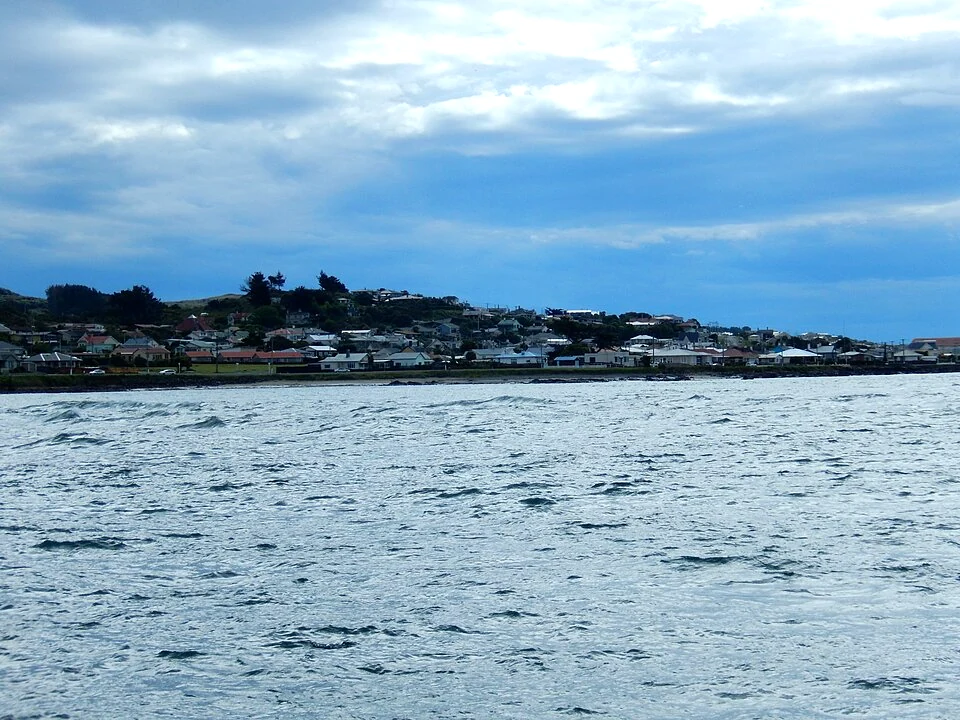
The cheapest house is rarely the cheapest life, which is the trap every "most affordable suburbs" list falls straight into. A $300,000 house is no bargain if the nearest decent job is two hours away and the power bill could fund a small republic. So we built ours to measure the thing that actually matters: where an ordinary income still goes the distance. And there is good news, genuinely. Affordable New Zealand is alive and thriving. It is just mostly south of where everyone keeps looking, and a fair bit cheerier about it than the property pages would have you believe.
Where the bargains actually are
The pattern is unmistakable and faintly pleased with itself: the further south you go, the further your money stretches. Invercargill is the country's reigning bargain capital, with more than a dozen suburbs where the average home still changes hands for under half a million. Its cheapest, Appleby, sits near $353,000, and a clutch of others, Bluff, Kew, Clifton, Strathern and Georgetown, live comfortably in the $300,000s. The outright lowest prices in the country turn up around Mataura, near Gore, where a whole house can cost roughly what an Auckland buyer hands over as a deposit. Zoom out and the West Coast and Southland both average around half a million, and across the hundreds of suburbs the property analysts have crunched, dozens were still selling for under half a million. Even Auckland keeps a few escape hatches: Tuakau, Waiuku and Pukekohe out on the southern fringe, and central-city apartments from around $480,000.
| Place | Median / average value | Note |
|---|---|---|
| Mataura, near Gore | ~$306,000 to $324,000 | Among the lowest in the country |
| Appleby, Invercargill | ~$353,000 | Cheapest suburb in the cheapest city |
| Auckland Central (apartments) | ~$480,800 | Auckland's most affordable |
| West Coast and Southland | ~$500,000 average | The two cheapest regions |
| New Zealand excluding Auckland | ~$705,000 | The national median once you remove Auckland |
For contrast, and a small sense of perspective, the deep end:
| Place | Median / average value | Note |
|---|---|---|
| Auckland (whole region) | ~$1,020,000 | For reference |
| Herne Bay, Auckland | ~$3,136,900 | Auckland's dearest suburb |
| Waiheke Island | ~$3,600,000 | The most expensive suburb in the country |
Herne Bay alone runs to more than three million, or roughly ten Matauras. That gap, not the averages, is the actual story of housing in this country.
Rent is quietly on your side right now
If you are renting rather than buying, the news is unusually upbeat. Through 2025 the rental market softened, the national median slipping slightly over the year and landlords competing for tenants for a change. The biggest drops landed in the priciest places: Wellington down about $40 a week, Gisborne down $30, Nelson down $23. Rents did climb in a few spots, Southland up around $50, the West Coast $40 and Canterbury $20, which is the same southern drift the buyers are following. So the expensive cities got a touch kinder to renters while the bargain regions got a touch more popular. Supply, for once, is doing tenants a favour.
| Region | Median rent change, year to November 2025 |
|---|---|
| Wellington | down about $40/week |
| Gisborne | down about $30/week |
| Nelson | down about $23/week |
| Canterbury | up about $20/week |
| West Coast | up about $40/week |
| Southland | up about $50/week |
What you trade, and what you get
None of this is free, and we are not going to pretend otherwise. The price of a cheap house is usually distance: from the big-city salaries, the specialist hospital, the direct international flight. But the trade is not all loss, which is the part the doom-merchants skip. The same towns that top the affordability tables also hand you space, a community that notices when you are away, and in several cases a coastline the boat-owning set has not yet found. Wairoa sits a short hop from the Mahia Peninsula. Patea owns a stretch of genuinely wild Taranaki coast. Kaitangata offers the Clutha River and a reputation for housing so cheap it has made international news. Affordable and pleasant are not opposites. They are just usually a long way from Queen Street, which plenty of people will tell you is the entire point.
How we score affordability
A single number never captures a place, but a few honest figures get close. We combine median household income, the typical weekly rent and the home-ownership rate from the 2023 Census into a transparent affordability score, and we publish the formula so you can argue with it. The deliberate gap is sale prices, which sit behind the big property valuers, so where you see dollar values on this page they are the most recent published snapshots from those firms, clearly attributed, rather than a live feed. When we license live price data, you will know, because we will say so. The cheapest coastal suburbs get their own table, for the romantics and the realistic alike.
Frequently asked questions
- What is the cheapest place to buy a house in New Zealand?
- The deep south. Mataura near Gore has some of the lowest prices in the country, with houses around $306,000 to $324,000, and Invercargill is the cheapest city, its suburb Appleby averaging about $353,000. Whole regions, the West Coast and Southland, average around half a million.
- What is the cheapest major city?
- Among the big centres, Christchurch is the most affordable, and Invercargill is the cheapest city overall. Even within expensive Auckland, the southern edge towns of Tuakau, Waiuku and Pukekohe are far gentler on the wallet than the isthmus.
- Are there affordable suburbs by the sea?
- Yes, if you are willing to swap a commute for a view. Wairoa near the Mahia Peninsula, Patea on the Taranaki coast and a handful of small Otago and Southland coastal towns still sit near the bottom of the price tables. The catch is always distance from a city, which is rather the appeal of a quiet beach.
- Is renting getting cheaper?
- In the big cities, yes, for now. Through 2025 the national median rent slipped slightly, with Wellington, Gisborne and Nelson seeing the largest weekly falls. Rents rose in Southland, the West Coast and Canterbury, the regions buyers are also chasing.
- Why don't you just rank suburbs by house price?
- Because a cheap house is not the same as an affordable life. A low price tag with no jobs and high rents is a trap. We weigh income, rent and ownership together, and we treat sale prices as one input among several rather than the whole answer.
- Where does the data come from?
- Income, rent and ownership from Stats NZ Census 2023 at suburb (SA2) level, current rent movements from MBIE's tenancy bond data, and house values from published OneRoof, CoreLogic and REINZ reporting, each attributed. No estimates dressed up as facts.
Methodology
The affordability score combines three 2023 Census figures, median household income, median weekly rent paid and the home-ownership rate, into a single transparent measure, with the formula published on the page. Rent movements come from MBIE's tenancy bond database, which records every new bond lodged and is released free under a Creative Commons licence. House values are the most recent published figures from the major property data firms and are dated and attributed, because suburb-level sale prices are not open data. Where a suburb spans more than one statistical area, we combine the parts by population.
More from Sticky Beak
- By Tineke · 10 June 2026The richest and poorest suburbs in New Zealand
- By Kurt · 10 June 2026School deciles are gone. Meet the Equity Index.
- By Tineke · 10 June 2026The fastest-growing suburbs in New Zealand (and the ones quietly shrinking)
- By Kurt · 10 June 2026The sunniest, wettest and windiest places in New Zealand